 Carsiste
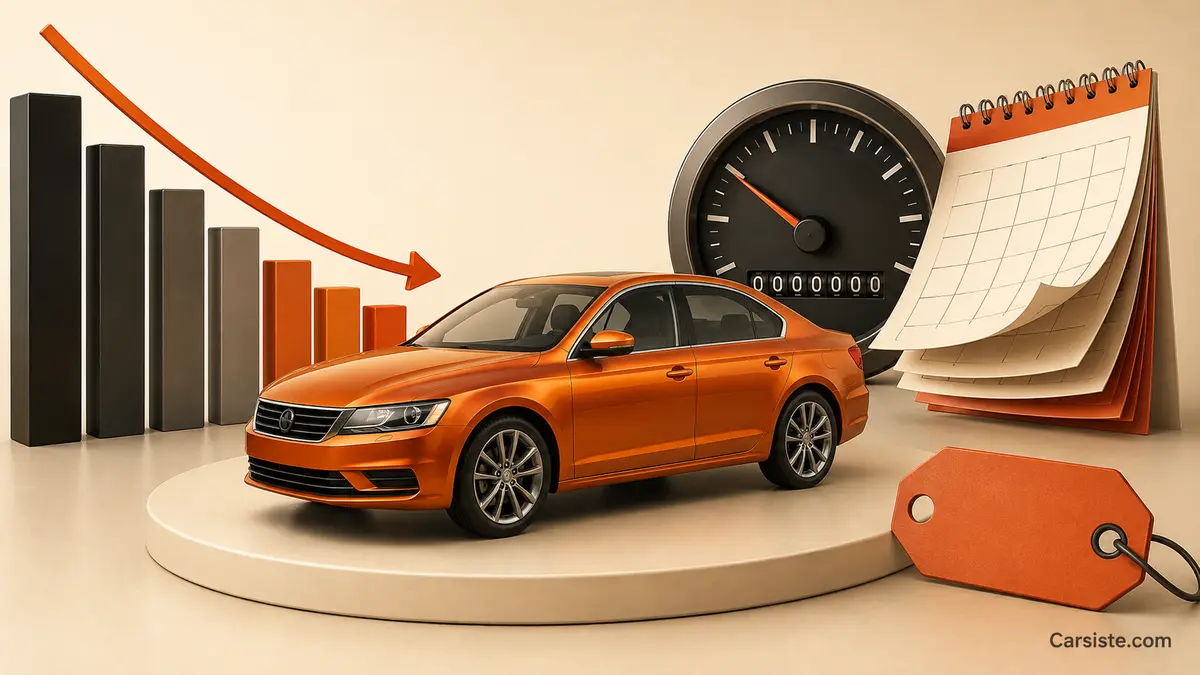
Depreciation is a quiet cost: the car may run well while thousands of dollars of market value disappear. Planning for that value loss makes purchase-price comparisons more realistic.
Depreciation is not a straight line
Many vehicles lose value faster in earlier years and more slowly later, but the pattern varies. A redesign, incentive, reliability issue, fuel-price change, or shift in used-car supply can change the market quickly.
What influences resale value
- Brand and model demand in the local market
- Age, mileage, condition, color, trim, and options
- Accident, title, and service history
- Warranty coverage and expected repair costs
- New-vehicle discounts and financing incentives
Mileage is only one factor
Lower mileage can help, but documented maintenance, clean condition, appropriate tires, and a clear title also matter. Modifications may reduce the buyer pool even when they cost a great deal to install.
Use scenarios, not a promise
Estimate future value at several annual depreciation rates. The spread between results is a useful reminder that resale value is uncertain.
Reduce avoidable value loss
Follow the maintenance schedule, address warning lights, keep records, protect the interior, repair safety defects, and avoid preventable damage. Before selling or trading, obtain multiple offers because buyers use different inventory needs and pricing models.
Depreciation and financing
A long loan can decline more slowly than the vehicle's market value. Monitor the payoff balance before trading. Rolling negative equity into another loan increases the next amount financed and can repeat the problem.