 Carsiste
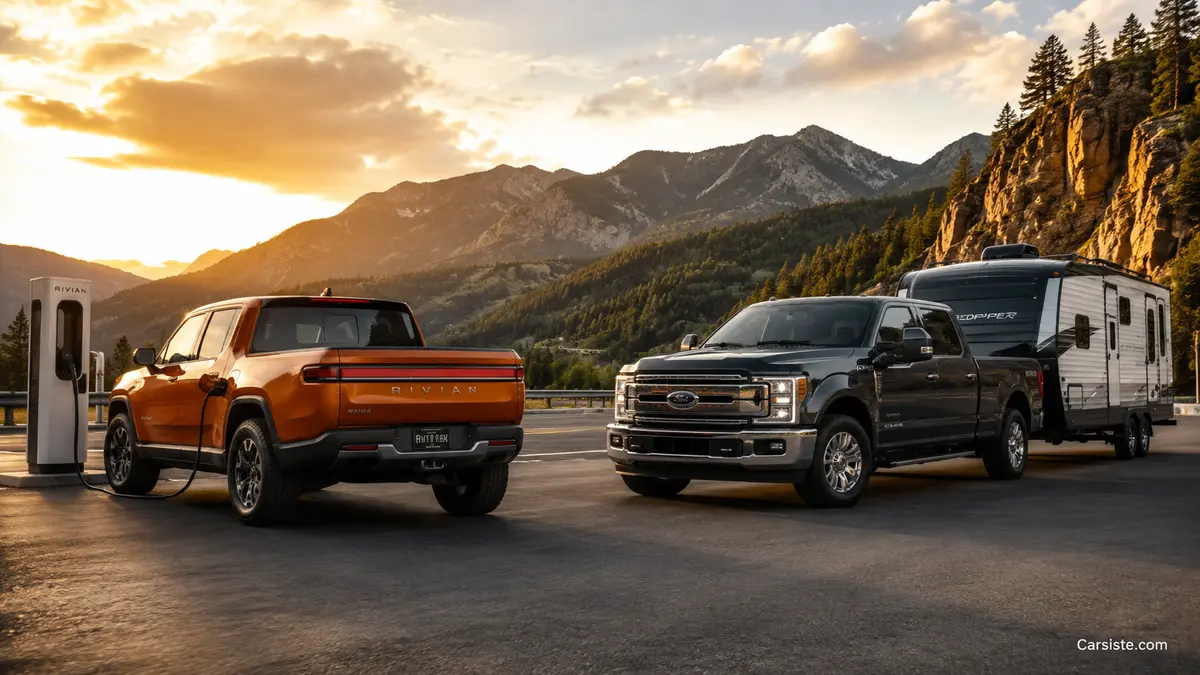
An electric truck can be effective for predictable local work, home or depot charging and routes where its range comfortably covers the day. A gas truck is usually easier for frequent long-distance towing, remote travel or work without dependable high-power charging. The payload sticker, trailer configuration and loaded-energy use matter more than headline horsepower.
What this comparison covers
Compare electric and gasoline pickups for towing range, payload, charging, work use and total cost.
Side-by-side comparison
| Decision area | First option | Second option |
|---|---|---|
| Daily energy | Electricity and charging efficiency | Gasoline and loaded MPG |
| Long-distance towing | Range and trailer-accessible charging are critical | Fast widespread refueling is an advantage |
| Local work | Quiet operation and depot charging can fit | Flexible refueling and mature support |
| Capability check | Payload label, tow guide and temperature | Payload label, tow guide and cooling/configuration |
Towing changes energy use dramatically
Aerodynamic drag, trailer weight, speed, wind, temperature and elevation can reduce range or MPG. Do not plan from unladen ratings. Seek credible tests with a trailer similar in size and shape, then maintain a safety buffer.
Charging a connected trailer is a route question
Check whether charging sites allow pull-through access or require unhitching. Record charger power, reliability, compatible networks and the truck’s charging curve. A large peak number does not mean that rate is sustained through the stop.
Payload may constrain before tow rating
Passengers, cargo, hitch equipment and trailer tongue weight all use payload. Read the specific door-jamb payload label and manufacturer towing instructions. Battery weight can influence payload, while gas-truck configuration choices also create large variation.
Price the actual duty cycle
For a work truck, calculate energy, maintenance, downtime, charging installation, insurance and tax treatment for the route. Home or depot electricity can be advantageous; frequent public fast charging and lost time may change the business case.
Buyer checklist
- Use the exact payload sticker
- Model range with the real trailer
- Map trailer-accessible charging
- Include charging or fueling time
- Maintain manufacturer-specified safety margins
Carsiste verdict
An electric truck can be effective for predictable local work, home or depot charging and routes where its range comfortably covers the day. A gas truck is usually easier for frequent long-distance towing, remote travel or work without dependable high-power charging. The payload sticker, trailer configuration and loaded-energy use matter more than headline horsepower.
Use written prices, exact model specifications, local operating costs and the conditions you encounter most often. A different driver can reasonably reach a different conclusion because mileage, parking, climate, financing, insurance and ownership period change the result.
Official sources and further verification
Also verify the exact model year using manufacturer owner manuals and warranty documents. Check VIN-specific open recalls through NHTSA before buying a used vehicle.
Frequently asked questions
How much does towing reduce EV range?
There is no universal percentage; trailer aerodynamics, speed, weather and terrain matter greatly.
Can an electric truck tow safely?
Use its manufacturer ratings, payload limits, hitch requirements and operating guidance.
Do I need to unhitch at chargers?
Some site layouts may require it; inspect planned stops before travel.
Which costs less for local work?
It depends on purchase price, charging cost, mileage, insurance, downtime and resale.
Is peak charging speed the same as average speed?
No. Charging power usually changes with battery state and temperature.
Run the numbers for your situation
Editorial note: Carsiste provides educational information, not financial, legal, insurance or mechanical advice. Prices, regulations, incentives, specifications and availability can change. Confirm current information with the relevant manufacturer, dealer, lender, insurer, utility or qualified technician.