 Carsiste
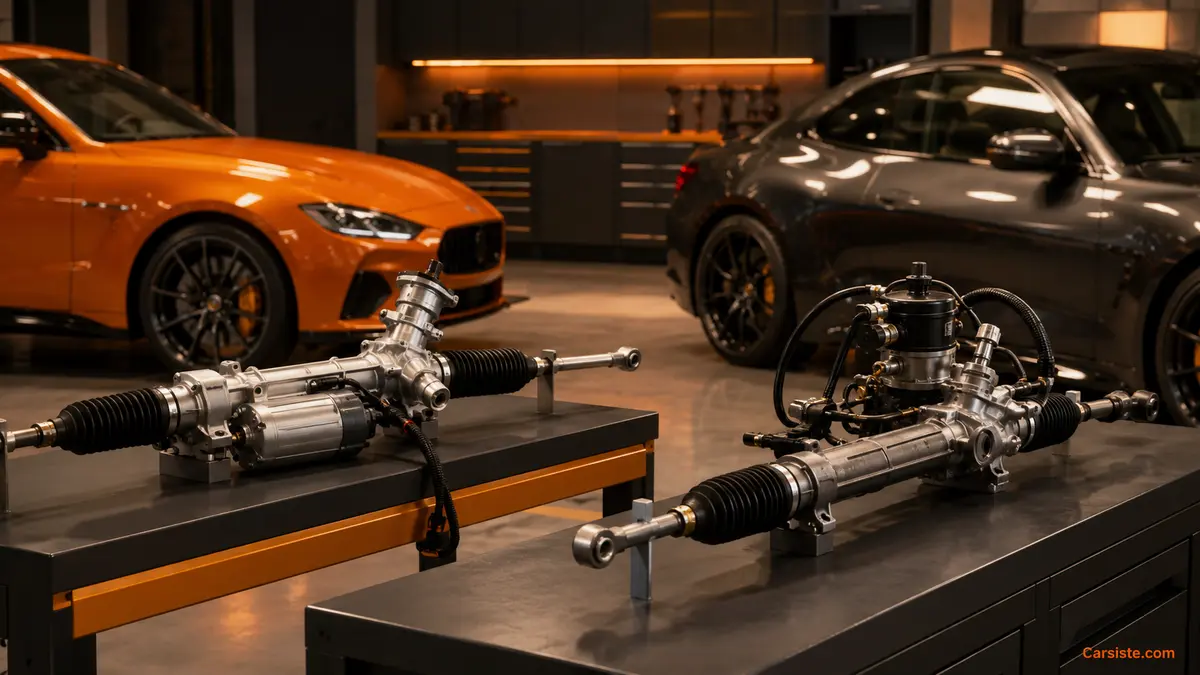
Electric power steering is now common because it provides assistance only when needed, removes an engine-driven hydraulic pump and integrates with parking and driver-assistance functions. Hydraulic steering remains valued in some vehicles for consistent feedback, but it uses fluid, hoses, seals and pump power. Neither system is automatically reliable or communicative; design and calibration determine the result.
What this comparison covers
Compare EPS and hydraulic steering for efficiency, feel, packaging, diagnostics, maintenance and repair.
Side-by-side comparison
| Decision area | First option | Second option |
|---|---|---|
| Assist source | Electric motor and control electronics | Pump and pressurized fluid |
| Routine checks | Electrical faults, calibration and mechanical joints | Fluid level/condition, hoses, seals and pump |
| Integration | Supports variable assist and many ADAS functions | Possible, but less naturally software-controlled |
| Common concern | Sensor/module/motor diagnosis | Leaks, pump noise and hose wear |
How assistance is produced
EPS uses an electric motor at the column or steering rack, guided by torque, position and vehicle-speed inputs. Hydraulic steering uses a pump, pressurized fluid and a control valve. Electro-hydraulic systems combine an electric pump with hydraulic assistance and should not be confused with pure EPS.
Efficiency and packaging
A conventional hydraulic pump can consume power while the engine runs, even when little steering assistance is needed. EPS can reduce that continuous parasitic demand and eliminates fluid lines. It also gives engineers flexibility in engine-bay packaging and assistance curves.
Maintenance and diagnosis differ
Hydraulic systems may leak fluid, wear pumps or contaminate fluid. EPS eliminates those items but adds sensors, wiring, modules and electric motors that require scan-tool diagnosis and correct calibration. A warning light or intermittent assistance should be investigated promptly.
Feel depends on more than the assist type
Rack mounting, tire construction, suspension geometry, software and friction shape steering response. Some hydraulic systems feel numb and some EPS systems feel precise. Test the exact model on-center, through a corner and during parking rather than choosing by label.
Buyer checklist
- Identify the exact system fitted
- Scan steering faults before replacing parts
- Check alignment and tire pressure
- Ask whether calibration follows repairs
- Test consistent assistance at multiple speeds
Carsiste verdict
Electric power steering is now common because it provides assistance only when needed, removes an engine-driven hydraulic pump and integrates with parking and driver-assistance functions. Hydraulic steering remains valued in some vehicles for consistent feedback, but it uses fluid, hoses, seals and pump power. Neither system is automatically reliable or communicative; design and calibration determine the result.
Use written prices, exact model specifications, local operating costs and the conditions you encounter most often. A different driver can reasonably reach a different conclusion because mileage, parking, climate, financing, insurance and ownership period change the result.
Official sources and further verification
Also verify the exact model year using manufacturer owner manuals and warranty documents. Check VIN-specific open recalls through NHTSA before buying a used vehicle.
Frequently asked questions
Does EPS use steering fluid?
Pure electric power steering does not use hydraulic steering fluid.
Is hydraulic steering always better for feel?
No. Vehicle-level tuning matters more than the label alone.
Can a weak battery affect EPS?
Low system voltage can contribute to warnings or reduced assistance; diagnose the charging system and stored faults.
Why does EPS need calibration?
Some systems need accurate steering-angle, torque or position references after certain repairs.
Which costs less to maintain?
EPS removes fluid-service and leak points, but electronic failures can still be expensive.
Run the numbers for your situation
Editorial note: Carsiste provides educational information, not financial, legal, insurance or mechanical advice. Prices, regulations, incentives, specifications and availability can change. Confirm current information with the relevant manufacturer, dealer, lender, insurer, utility or qualified technician.