 Carsiste
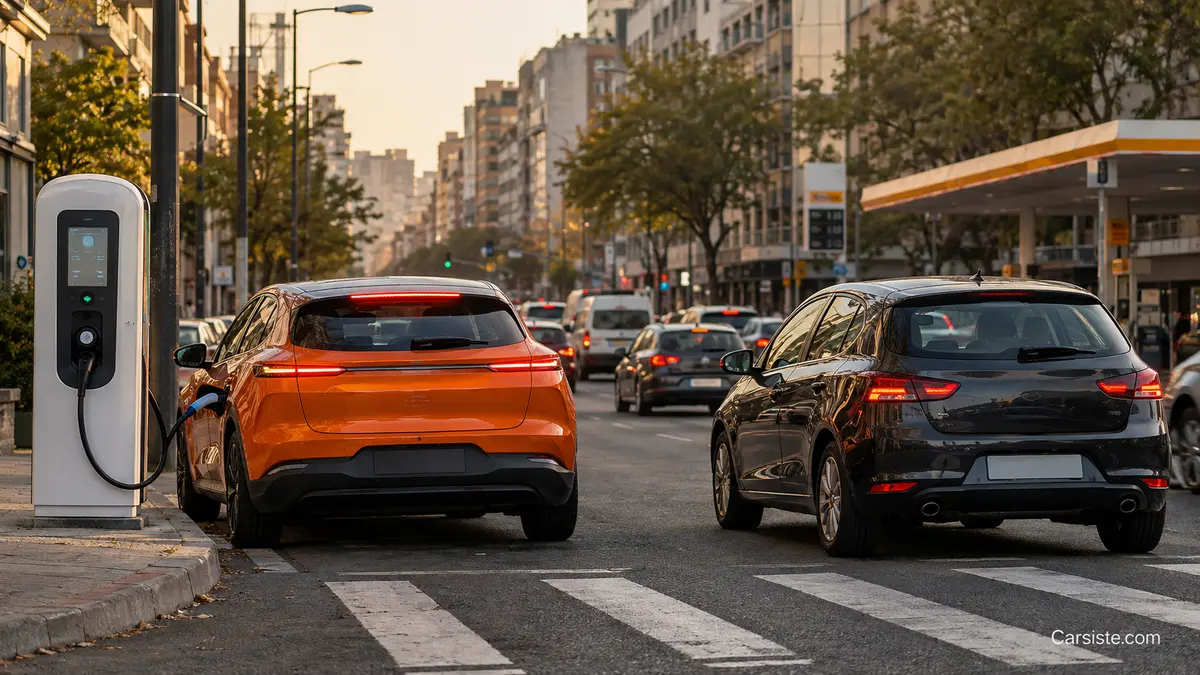
An EV is often especially efficient in stop-and-go use because low-speed electric operation and regenerative braking avoid much of the idling and braking loss of a conventional car. Yet an urban resident without private parking may face expensive or inconvenient charging. A small gas car can remain practical when street parking and unpredictable travel make charging unreliable.
What this comparison covers
Compare electric and gasoline cars for urban efficiency, charging, parking, traffic, maintenance and cost.
Side-by-side comparison
| Decision area | First option | Second option |
|---|---|---|
| Traffic energy | Efficient low-speed operation and regeneration | Idling and low-speed fuel use vary by design |
| Routine energy access | Requires a workable charging routine | Widespread gasoline stations |
| Parking | Charging availability may limit options | No charger required |
| Best fit | Predictable city mileage with charging | Street parking or highly variable travel |
City efficiency favors different systems
EVs consume little energy while stationary and can recover part of deceleration energy. Gas cars may use stop-start systems but still operate a combustion engine. Compare official city ratings and a realistic traffic pattern for the exact vehicles.
Parking and charging are the decisive urban questions
Home charging is not useful if the vehicle parks on the street without legal access. Evaluate workplace charging, nearby public stations, pricing, parking limits and whether chargers are regularly occupied or out of service. Do not buy first and solve charging later.
Short trips have comfort and maintenance implications
An EV can heat or cool the cabin without idling an engine, though climate use consumes battery energy. Repeated short gas-car trips may not fully warm the powertrain. Follow the manufacturer schedule for severe or short-trip use where applicable.
Include city-specific ownership costs
Insurance, parking, registration, tolls, theft exposure and body damage may exceed energy savings. A smaller vehicle can be easier to park regardless of powertrain. Compare total household mobility cost, including whether transit or car sharing could reduce annual mileage.
Buyer checklist
- Audit seven days of parking locations
- Price public charging and parking together
- Compare compact vehicles of equal size
- Add urban insurance and parking costs
- Test cabin comfort and visibility
Carsiste verdict
An EV is often especially efficient in stop-and-go use because low-speed electric operation and regenerative braking avoid much of the idling and braking loss of a conventional car. Yet an urban resident without private parking may face expensive or inconvenient charging. A small gas car can remain practical when street parking and unpredictable travel make charging unreliable.
Use written prices, exact model specifications, local operating costs and the conditions you encounter most often. A different driver can reasonably reach a different conclusion because mileage, parking, climate, financing, insurance and ownership period change the result.
Official sources and further verification
Also verify the exact model year using manufacturer owner manuals and warranty documents. Check VIN-specific open recalls through NHTSA before buying a used vehicle.
Frequently asked questions
Are EVs more efficient in traffic?
They can benefit from efficient low-speed operation and regenerative braking, but results vary.
Can I own an EV with street parking?
Possibly, but only with a dependable legal charging routine.
Does regenerative braking eliminate brake service?
No. Friction brakes still require inspection and can face corrosion or wear.
Is a gas car better for low annual mileage?
Its lower purchase price may matter more when there are few miles over which to recover an EV premium.
What is the biggest city-car cost?
It may be parking or insurance rather than energy, depending on location.
Run the numbers for your situation
Editorial note: Carsiste provides educational information, not financial, legal, insurance or mechanical advice. Prices, regulations, incentives, specifications and availability can change. Confirm current information with the relevant manufacturer, dealer, lender, insurer, utility or qualified technician.