 Carsiste
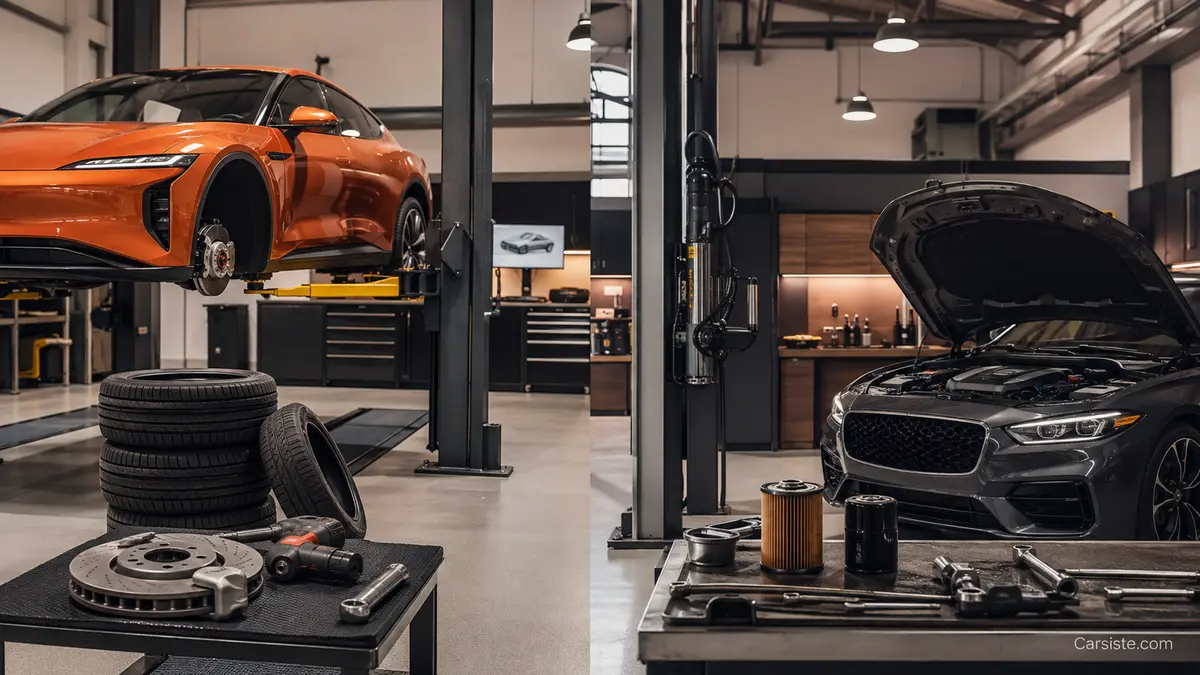
Battery EVs generally require fewer routine powertrain services because they have no engine oil, spark plugs or exhaust system, and regenerative braking can reduce friction-brake use. That does not make ownership maintenance-free. Tires, suspension, HVAC, low-voltage batteries, filters, brake fluid and model-specific repairs remain. A fair comparison separates predictable service from uncertain major repairs.
What this comparison covers
Compare scheduled service, brakes, tires, fluids and repair exposure for electric and gasoline cars.
Side-by-side comparison
| Decision area | First option | Second option |
|---|---|---|
| Engine-related service | No engine oil, plugs or exhaust service | Oil, filters, ignition and emissions items |
| Brakes | Regeneration may reduce pad wear | Conventional wear pattern varies by use |
| Tires/suspension | Still require normal inspection and replacement | Still require normal inspection and replacement |
| Major repair risk | Battery, electronics, motor and thermal systems | Engine, transmission, fuel and emissions systems |
Build schedules from owner manuals
List each manufacturer-required item by time and mileage for the exact model. Avoid a generic “EV service” or “gas service” allowance. PHEVs and hybrids are not equivalent to battery EVs because they retain combustion engines.
Treat tires as vehicle-specific
Vehicle weight, torque, alignment, pressure, tire compound and driving style influence wear. Some EVs may wear tires quickly, but a powerful gas car can do the same. Price the specified size and load rating and follow rotation guidance.
Regeneration changes—not eliminates—brake needs
Regenerative braking can reduce pad wear, while friction brakes still provide emergency and low-speed braking. Infrequent use can contribute to corrosion in some climates. Inspection and brake-fluid requirements remain important.
Separate warranty risk from routine cost
High-voltage battery and drive components have defined warranty terms. Engines and transmissions also have coverage limits. Compare deductibles, exclusions, repair networks and the financial effect of a failure after warranty without pretending either outcome is certain.
Buyer checklist
- Download both maintenance schedules
- Price exact tire sizes
- Read warranty exclusions and term
- Budget a repair reserve
- Use local labor rates
Carsiste verdict
Battery EVs generally require fewer routine powertrain services because they have no engine oil, spark plugs or exhaust system, and regenerative braking can reduce friction-brake use. That does not make ownership maintenance-free. Tires, suspension, HVAC, low-voltage batteries, filters, brake fluid and model-specific repairs remain. A fair comparison separates predictable service from uncertain major repairs.
Use written prices, exact model specifications, local operating costs and the conditions you encounter most often. A different driver can reasonably reach a different conclusion because mileage, parking, climate, financing, insurance and ownership period change the result.
Official sources and further verification
Also verify the exact model year using manufacturer owner manuals and warranty documents. Check VIN-specific open recalls through NHTSA before buying a used vehicle.
Frequently asked questions
Do EVs need oil changes?
Battery EVs do not have engine oil; hybrids and PHEVs do.
Do EV brakes last forever?
No. Regeneration can reduce wear, but friction brakes still need inspection and service.
Why can EV tires wear quickly?
Weight, torque, alignment, pressure, compound and driving style can contribute.
Is an EV battery routine maintenance?
The traction battery is not normally replaced as routine service; warranty and health are model-specific.
Which has lower maintenance cost?
EV routine powertrain maintenance is generally lower, but total cost depends on the exact vehicles and repairs.
Run the numbers for your situation
Editorial note: Carsiste provides educational information, not financial, legal, insurance or mechanical advice. Prices, regulations, incentives, specifications and availability can change. Confirm current information with the relevant manufacturer, dealer, lender, insurer, utility or qualified technician.