 Carsiste
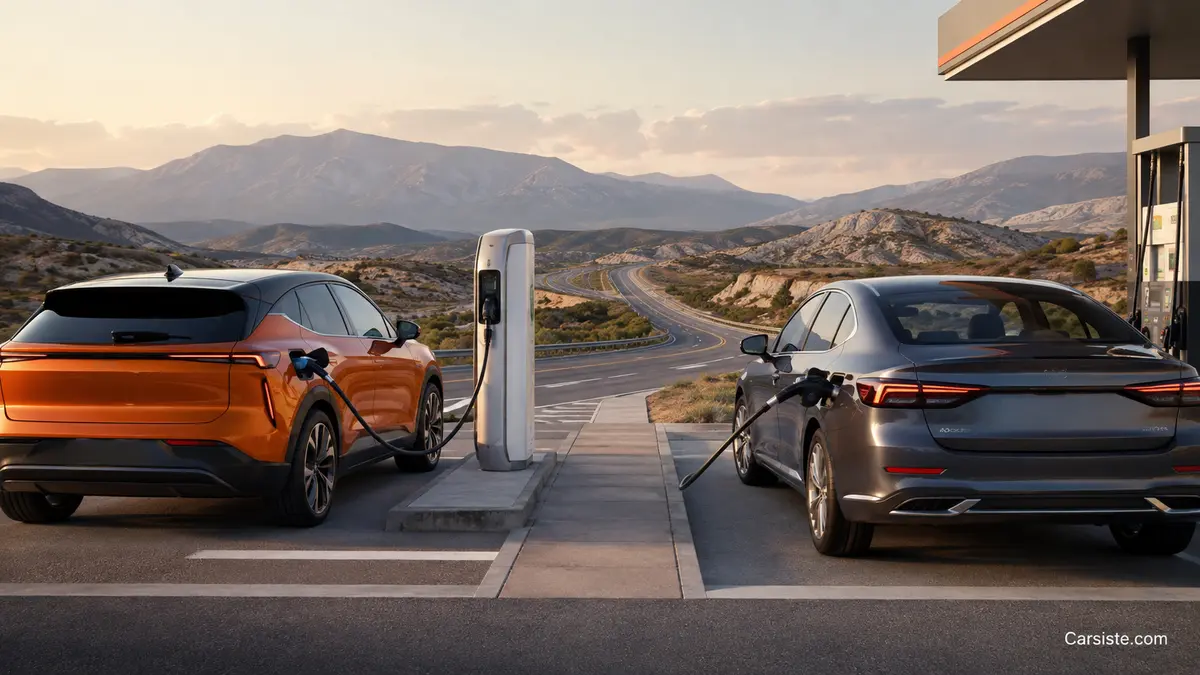
A hybrid usually minimizes planning and stop time on frequent long trips because it combines strong fuel economy with widespread gasoline refueling. An EV can be comfortable and economical when its highway range, charging curve and route network align with the trip. The right comparison uses door-to-door travel time and actual charging locations, not only rated range.
What this comparison covers
Compare electric and hybrid cars for highway range, stop time, weather, charging reliability and trip cost.
Side-by-side comparison
| Decision area | First option | Second option |
|---|---|---|
| Route planning | Charger locations, backups and charging curve | Fuel stations and realistic tank range |
| Weather sensitivity | Range and charging can change | MPG can change, usually with simpler refueling recovery |
| Stop duration | Longer energy stops, sometimes combined with rest | Short gasoline stops |
| Best fit | Routes with reliable fast charging and acceptable stops | Frequent remote or time-sensitive long trips |
Build the route before choosing the car
Map the longest recurring trip in both directions. For the EV, identify compatible fast chargers, backup sites, amenities and arrival state-of-charge. For the hybrid, identify fuel availability but also calculate realistic highway MPG and tank range.
Adjust range for conditions
High speed, cold temperatures, cabin heat, headwinds, elevation, rain, roof cargo and towing can change EV energy use. They also affect hybrid fuel economy. Use a buffer and avoid planning an EV to arrive nearly empty.
Understand the charging curve
Fast-charging power is not constant. The vehicle may charge rapidly over part of the battery range and slow as state-of-charge rises or temperature changes. Compare time to add the energy needed for the next leg rather than time to 100 percent.
Value stop time according to the traveler
A family may welcome meal or rest stops, while a business traveler may place a high cost on delay. Include detours, queues and charger activation. A hybrid refuel is short, but total trip cost still includes gasoline and breaks.
Buyer checklist
- Plan the worst recurring route
- Use highway rather than city efficiency
- Maintain a weather buffer
- Check charger reliability and backups
- Compare total trip time and energy dollars
Carsiste verdict
A hybrid usually minimizes planning and stop time on frequent long trips because it combines strong fuel economy with widespread gasoline refueling. An EV can be comfortable and economical when its highway range, charging curve and route network align with the trip. The right comparison uses door-to-door travel time and actual charging locations, not only rated range.
Use written prices, exact model specifications, local operating costs and the conditions you encounter most often. A different driver can reasonably reach a different conclusion because mileage, parking, climate, financing, insurance and ownership period change the result.
Official sources and further verification
Also verify the exact model year using manufacturer owner manuals and warranty documents. Check VIN-specific open recalls through NHTSA before buying a used vehicle.
Frequently asked questions
Can an EV handle road trips?
Yes, when range, charging speed and route infrastructure fit the trip.
Why not charge an EV to 100 percent at every stop?
Charging often slows at high state-of-charge; adding only the needed energy can reduce stop time.
Does cold weather affect hybrids?
Yes, fuel economy can decline, though refueling remains quick.
What EV specification matters most for trips?
Usable highway range and the charging curve together are more informative than peak range alone.
Which is cheaper per trip?
Calculate route-specific gasoline and charging prices; public fast-charging rates can differ from home rates.
Run the numbers for your situation
Editorial note: Carsiste provides educational information, not financial, legal, insurance or mechanical advice. Prices, regulations, incentives, specifications and availability can change. Confirm current information with the relevant manufacturer, dealer, lender, insurer, utility or qualified technician.