 Carsiste
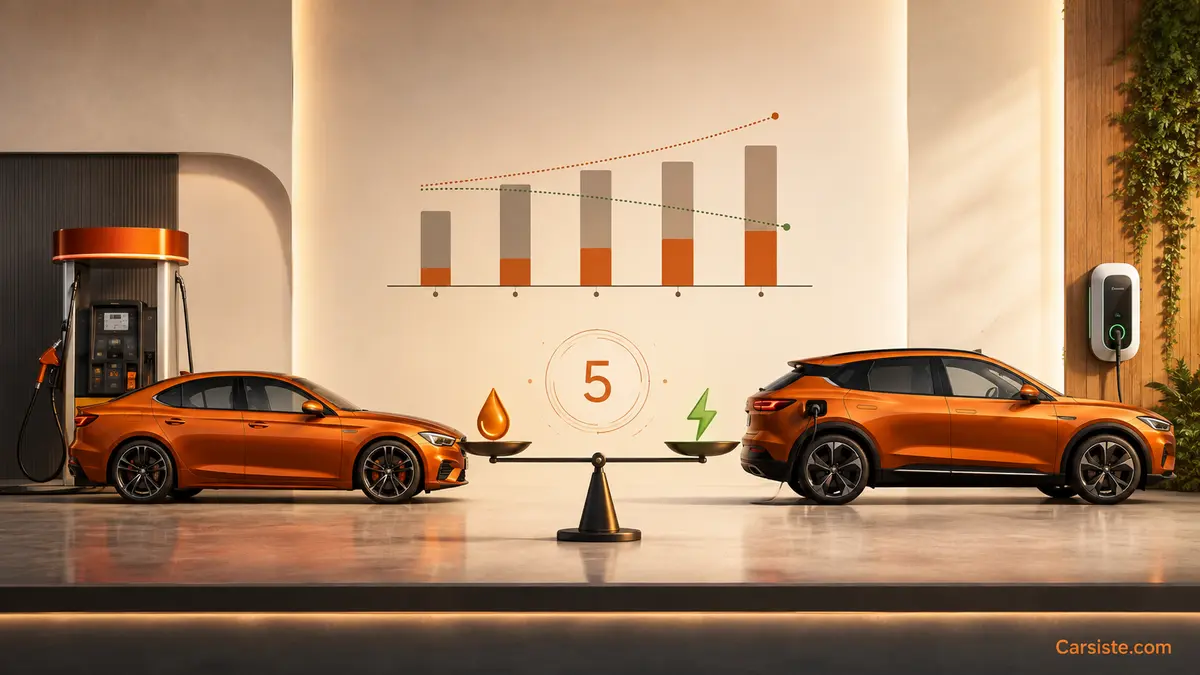
There is no universal winner. The less expensive choice depends on the vehicles compared, annual mileage, home-charging access, local energy prices, insurance, incentives, maintenance, and resale value.
Begin with comparable vehicles
Compare cars that meet the same passenger, cargo, performance, and safety needs. Use the actual expected transaction price after confirmed discounts. Do not include an incentive until you have verified vehicle, income, purchase, and location eligibility through the official program.
Calculate energy per mile
For a gasoline vehicle, divide gasoline price by MPG. For an EV, divide electricity price per kWh by miles per kWh. Home charging can be inexpensive, while frequent public fast charging may cost considerably more. Run a blended rate if both are expected.
| Cost area | Gas vehicle | Electric vehicle |
|---|---|---|
| Energy input | Price per gallon and MPG | Price per kWh and mi/kWh |
| Routine service | Includes engine-related service | Fewer powertrain service items |
| Upfront equipment | Usually none | Possible home-charger installation |
Include costs the fuel comparison misses
Insurance can differ significantly by model. Tire wear depends on weight, alignment, driving style, and tire design. Registration rules may include EV fees. Battery warranty coverage, expected resale value, and access to qualified service also belong in the decision.
Find the break-even logic
If an EV costs more upfront but saves money each year, divide the initial price difference by estimated annual operating savings. The result is an approximate number of years to recover the premium. If that period exceeds planned ownership, the savings may never be realized by that owner.
Run three scenarios
- Low mileage with mostly public charging
- Expected mileage with normal home charging
- High mileage with off-peak home charging