 Carsiste
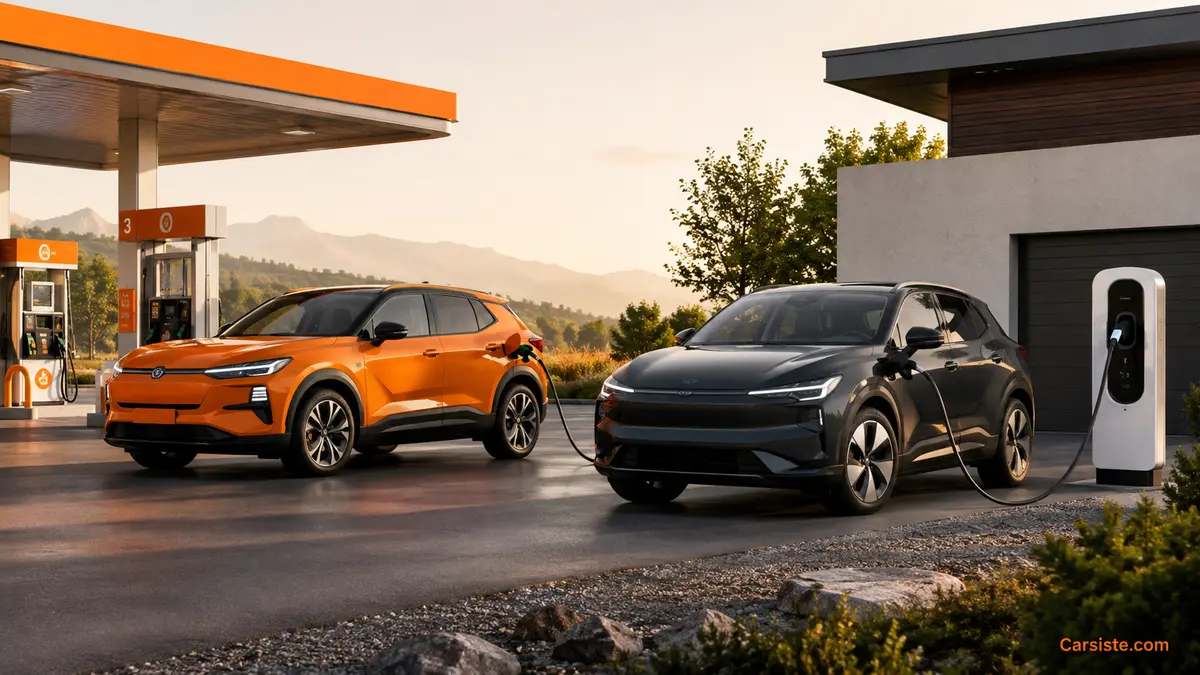
A conventional hybrid is often the easier transition for a driver without dependable charging because it refuels like a gasoline car and improves efficiency automatically. A battery-electric car can deliver lower energy use and fewer routine powertrain services when charging fits the owner’s parking and travel pattern. Decide from daily behavior: where the car sleeps, how far it travels, how often it takes long trips and what local energy actually costs.
What this comparison covers
Compare hybrid and electric cars for commuting, road trips, charging, maintenance and total ownership cost.
Side-by-side comparison
| Decision area | First option | Second option |
|---|---|---|
| Energy source | Electricity stored in a rechargeable battery | Gasoline plus regenerative electrical assistance |
| Routine fueling | Plug in at home, work or public stations | Refuel at gasoline stations |
| Powertrain service | No engine oil or exhaust system | Engine and emissions service remain |
| Best fit | Predictable travel with dependable charging | Drivers wanting efficiency without plugging in |
Understand what “hybrid” means
A conventional hybrid cannot be plugged in. Its engine, motor, small traction battery and regenerative braking work together, with the engine supplying fuel energy. An EV uses a much larger rechargeable battery and no gasoline engine. That difference changes refueling, maintenance and trip planning.
Match charging to the parking situation
An EV is most convenient when routine charging happens while the car is already parked. Apartment residents should confirm reliable workplace or nearby charging rather than assuming a public station will always be available. A hybrid requires no charging plan but remains exposed to gasoline prices and engine maintenance.
Compare road-trip behavior honestly
A hybrid can refuel quickly almost anywhere. An EV trip depends on usable highway range, weather, charging-curve speed, station location and charger reliability. Many EV owners find occasional planned stops acceptable; frequent remote travel or towing can make the hybrid simpler.
Separate efficiency from total value
An efficient EV is not automatically the cheaper purchase. Compare transaction price, financing, insurance, energy, maintenance and resale. Also value quiet operation, tailpipe emissions, convenience and time according to the household—not according to marketing claims.
Buyer checklist
- Confirm overnight or workplace charging
- Check winter and highway range for the exact EV
- Compare equivalent body styles and trims
- Price insurance before choosing
- Calculate long-trip charging time, not only daily range
Carsiste verdict
A conventional hybrid is often the easier transition for a driver without dependable charging because it refuels like a gasoline car and improves efficiency automatically. A battery-electric car can deliver lower energy use and fewer routine powertrain services when charging fits the owner’s parking and travel pattern. Decide from daily behavior: where the car sleeps, how far it travels, how often it takes long trips and what local energy actually costs.
Use written prices, exact model specifications, local operating costs and the conditions you encounter most often. A different driver can reasonably reach a different conclusion because mileage, parking, climate, financing, insurance and ownership period change the result.
Official sources and further verification
Also verify the exact model year using manufacturer owner manuals and warranty documents. Check VIN-specific open recalls through NHTSA before buying a used vehicle.
Frequently asked questions
Does a hybrid need to be plugged in?
A conventional hybrid does not. A plug-in hybrid is a different category.
Is an EV better for city driving?
Regenerative braking and efficient low-speed operation can work well in cities, but charging access still matters.
Which is easier for road trips?
A hybrid usually requires less planning because gasoline stations are widespread.
Which has less routine powertrain maintenance?
A battery-electric car generally has fewer engine-related service items because it has no combustion engine.
Should renters avoid EVs?
Not automatically, but they should confirm a dependable and reasonably priced charging routine before buying.
Run the numbers for your situation
Editorial note: Carsiste provides educational information, not financial, legal, insurance or mechanical advice. Prices, regulations, incentives, specifications and availability can change. Confirm current information with the relevant manufacturer, dealer, lender, insurer, utility or qualified technician.