 Carsiste
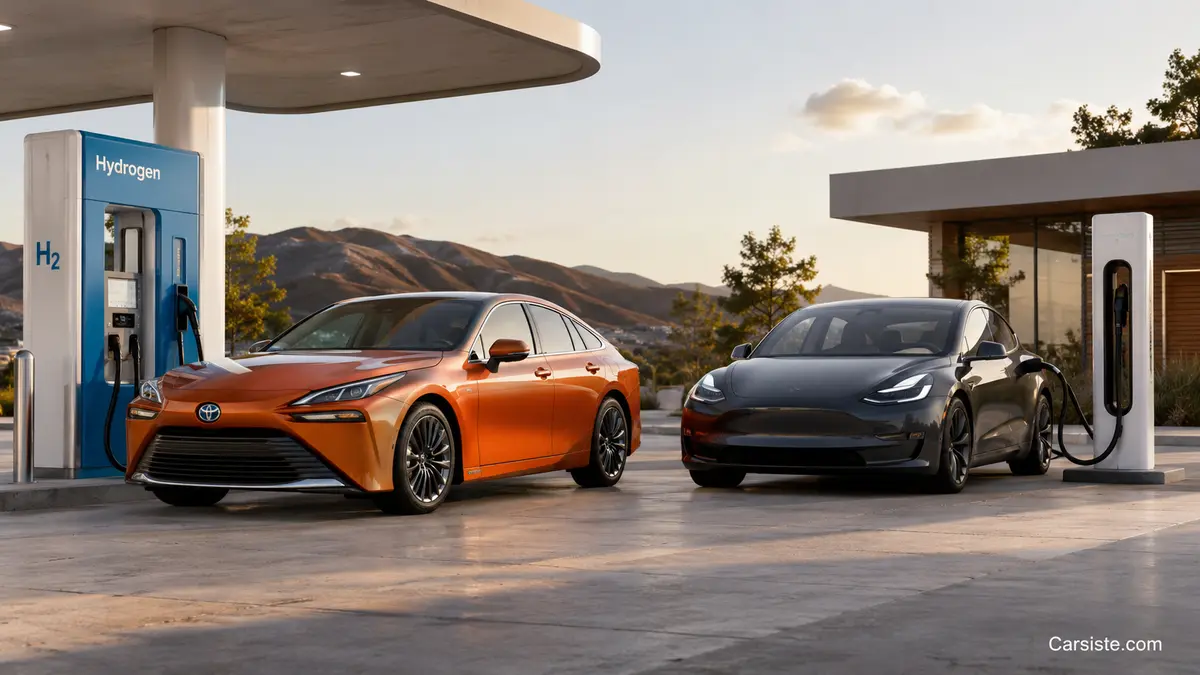
For most U.S. retail buyers today, a battery EV is the more practical zero-tailpipe-emission option where home and public charging are available, because vehicle and charging choices are broader. A hydrogen fuel-cell car can refuel quickly and travel without a large plug-in battery, but usefulness depends completely on a reliable local hydrogen station network and continued fuel support.
What this comparison covers
Compare fuel-cell and battery-electric cars through infrastructure, efficiency, refueling, availability and cost.
Side-by-side comparison
| Decision area | First option | Second option |
|---|---|---|
| Stored energy | Hydrogen in high-pressure tanks | Electricity in a battery |
| Routine location | Dedicated hydrogen station | Home/work/public charging |
| Tailpipe | Water and heat during operation | No tailpipe emissions |
| Primary constraint | Fuel and station availability | Charging access and charging time |
The energy pathway is different
A battery EV stores grid electricity directly in its battery. A fuel-cell vehicle stores hydrogen and converts it into electricity onboard, emitting water at the tailpipe. Production, compression, transport and conversion make infrastructure and upstream energy sources important to the comparison.
Infrastructure can decide the purchase
An EV owner may charge at home and use growing public networks. A fuel-cell owner must live and travel within reach of compatible hydrogen stations; a station outage can be a major constraint. Check current stations and fuel availability before considering a specific vehicle.
Refueling speed is only one convenience measure
Hydrogen refueling can resemble a short fuel stop, while EV charging takes longer but may occur while the vehicle is parked overnight. Compare total weekly effort, detours, station reliability and road-trip coverage—not one stop in isolation.
Ownership evidence is model- and region-specific
Vehicle purchase or lease programs, included fuel, tank inspection requirements, insurance, service centers and resale support may vary. Do not assume a technology demonstration or fleet case translates to normal consumer availability.
Buyer checklist
- Check live station availability before shopping
- Confirm local qualified service
- Compare upstream and direct emissions separately
- Price fuel after any included allowance
- Evaluate resale and long-term manufacturer support
Carsiste verdict
For most U.S. retail buyers today, a battery EV is the more practical zero-tailpipe-emission option where home and public charging are available, because vehicle and charging choices are broader. A hydrogen fuel-cell car can refuel quickly and travel without a large plug-in battery, but usefulness depends completely on a reliable local hydrogen station network and continued fuel support.
Use written prices, exact model specifications, local operating costs and the conditions you encounter most often. A different driver can reasonably reach a different conclusion because mileage, parking, climate, financing, insurance and ownership period change the result.
Official sources and further verification
Also verify the exact model year using manufacturer owner manuals and warranty documents. Check VIN-specific open recalls through NHTSA before buying a used vehicle.
Frequently asked questions
Is a hydrogen car an EV?
It uses an electric motor, but its energy is supplied by an onboard fuel cell rather than a plug-charged traction battery.
Does a hydrogen car produce tailpipe pollution?
Fuel-cell vehicles produce water and heat at the tailpipe, while upstream hydrogen production still matters.
Can I fill hydrogen at a gasoline station?
Only if that location has compatible hydrogen dispensing equipment.
Is hydrogen refueling faster than EV charging?
A station fill can be faster, but station access and reliability are essential parts of convenience.
Which has better infrastructure?
This varies by location, but plug-in charging is generally available across more U.S. areas than retail hydrogen.
Run the numbers for your situation
Editorial note: Carsiste provides educational information, not financial, legal, insurance or mechanical advice. Prices, regulations, incentives, specifications and availability can change. Confirm current information with the relevant manufacturer, dealer, lender, insurer, utility or qualified technician.