 Carsiste
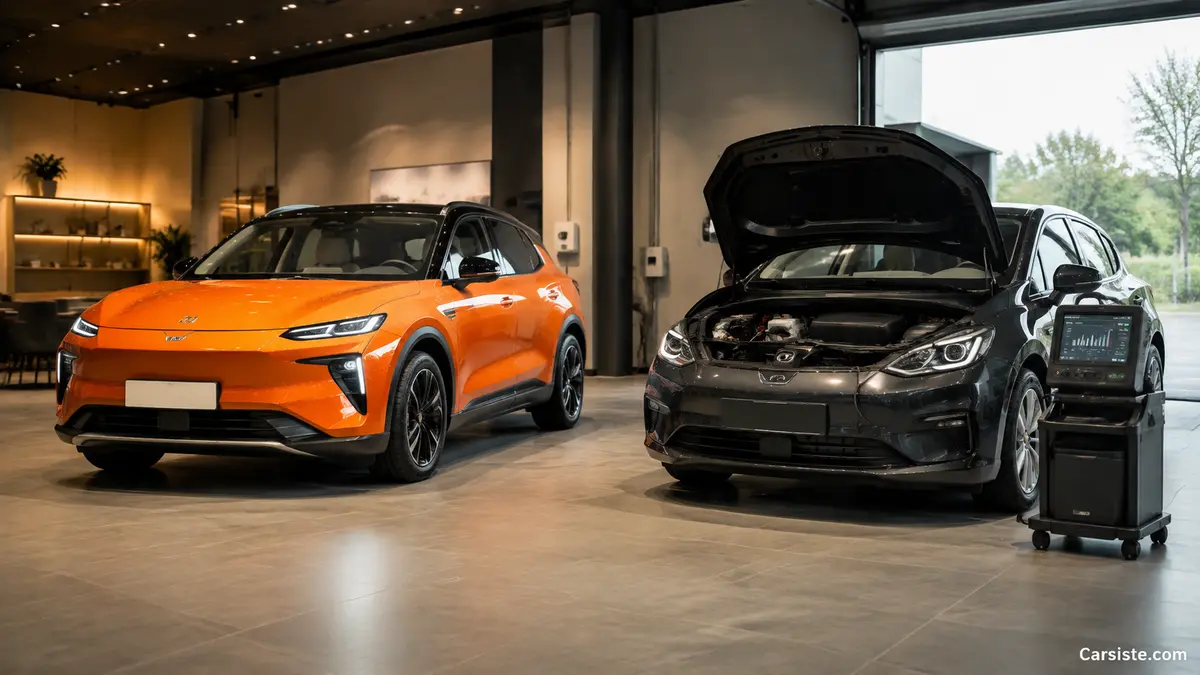
A used EV can deliver strong value when its usable range, battery condition, charging standard and remaining warranty fit the buyer’s needs. A new EV provides full warranty coverage, known history and newer charging or efficiency technology, but may cost more and face early depreciation. The decision should be made from the exact VIN, not age alone.
What this comparison covers
Compare new and used EVs through price, battery warranty, charging speed, range, software and depreciation.
Side-by-side comparison
| Decision area | First option | Second option |
|---|---|---|
| Price | Lower after prior depreciation | Higher, with possible current offers |
| History | Requires title, use and condition checks | Known from delivery, subject to transport inspection |
| Warranty | Remaining coverage varies | Full new-vehicle coverage |
| Technology | May charge slower or lack newer features | Latest available hardware for that model |
Measure current usable capability
For a used EV, verify displayed and diagnostic battery information, test charging, review service records and compare real range with the buyer’s longest routine trip. Original EPA range is a reference, not proof of current usable range.
Read the warranty transfer rules
Confirm battery and vehicle warranty start date, mileage limit, capacity provisions, exclusions and transferability. A “battery warranty” may cover defects under defined terms rather than guarantee the original range. Obtain terms from the manufacturer.
Compare charging hardware and software
Newer vehicles may support faster charging, better thermal management, updated connectors or improved route planning. Determine whether those improvements matter for daily use. Also confirm ongoing app and software support for the used model.
Do not confuse depreciation with a bargain
A lower used price can make ownership affordable, but investigate why the market discounts that model. Insurance, collision repair, parts supply, rental-fleet history, recalls and charging compatibility can affect value. A pre-purchase inspection remains essential.
Buyer checklist
- Check battery and basic vehicle diagnostics
- Confirm warranty by VIN
- Test AC and DC charging where supported
- Get an insurance quote
- Compare current range with actual routes
Carsiste verdict
A used EV can deliver strong value when its usable range, battery condition, charging standard and remaining warranty fit the buyer’s needs. A new EV provides full warranty coverage, known history and newer charging or efficiency technology, but may cost more and face early depreciation. The decision should be made from the exact VIN, not age alone.
Use written prices, exact model specifications, local operating costs and the conditions you encounter most often. A different driver can reasonably reach a different conclusion because mileage, parking, climate, financing, insurance and ownership period change the result.
Official sources and further verification
Also verify the exact model year using manufacturer owner manuals and warranty documents. Check VIN-specific open recalls through NHTSA before buying a used vehicle.
Frequently asked questions
How can I check a used EV battery?
Use model-specific diagnostics, service records, charging tests and a qualified inspection.
Does battery warranty guarantee full range?
Not necessarily; read the exact capacity and defect provisions.
Are newer EVs always better?
They may add useful technology, but price and actual needs determine value.
Can a used EV use every fast charger?
No. Connector, network, adapter approval and vehicle capability must match.
Should a used EV still get a normal inspection?
Yes. Tires, suspension, collision repair, HVAC and other systems matter in addition to the battery.
Run the numbers for your situation
Editorial note: Carsiste provides educational information, not financial, legal, insurance or mechanical advice. Prices, regulations, incentives, specifications and availability can change. Confirm current information with the relevant manufacturer, dealer, lender, insurer, utility or qualified technician.