 Carsiste
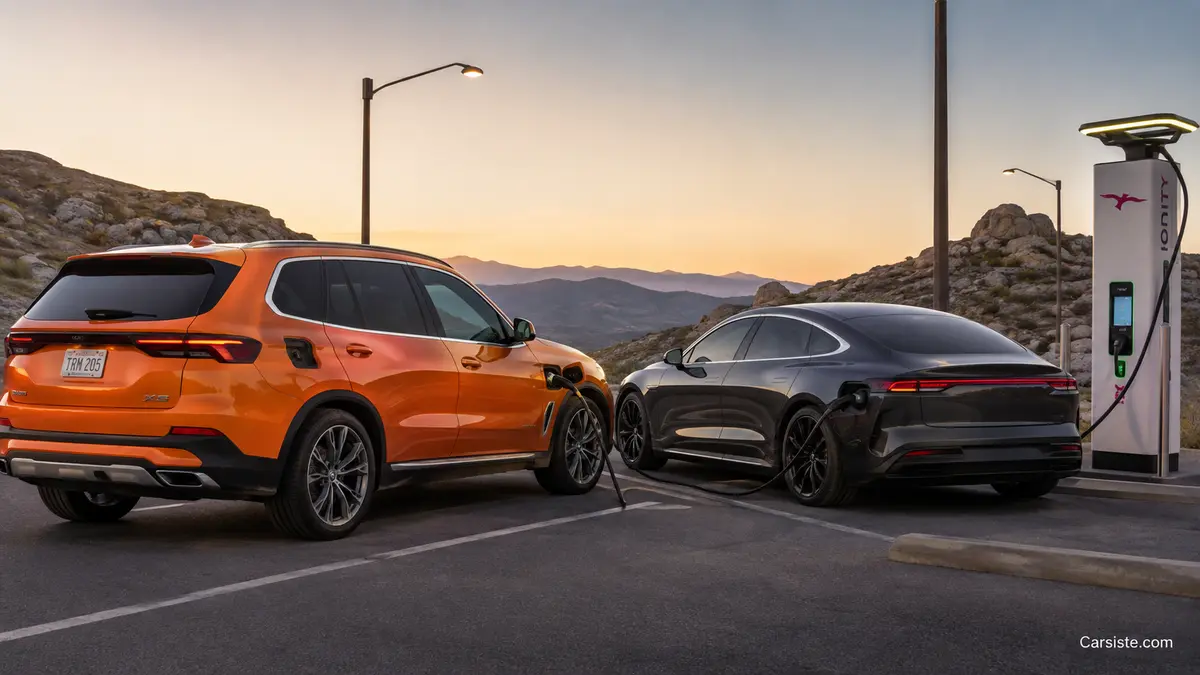
Choose a PHEV when regular charging can cover many local trips but gasoline backup meaningfully solves frequent long-distance or charging-access constraints. Choose a battery EV when routine charging is dependable and the vehicle’s real-world range covers daily use with an acceptable trip plan. A PHEV that is rarely charged and an EV that relies on inconvenient public charging can both miss their intended benefits.
What this comparison covers
Compare plug-in hybrids and battery EVs using electric range, gasoline backup, charging, maintenance and trips.
Side-by-side comparison
| Decision area | First option | Second option |
|---|---|---|
| Energy | Electricity plus gasoline | Electricity only |
| Long trip after battery use | Continues on gasoline | Requires charging |
| Powertrain maintenance | Engine and electric systems | No combustion-engine service |
| Best fit | Many chargeable short trips plus backup need | Dependable charging and suitable total range |
Compare electric miles, not labels
Estimate weekly miles that each vehicle can complete electrically. A PHEV may cover short commutes before its engine starts, while an EV covers all propulsion from the battery. Use climate-adjusted usable range and the driver’s charging opportunities.
Account for the second powertrain
A PHEV retains an engine, exhaust, fuel system and related maintenance alongside electric components. An EV removes those engine-related items but relies completely on charging and its high-voltage system. Compare warranty coverage for both systems.
Plan the hardest recurring trip
Daily commuting may suit either option. The differentiator can be a weekly remote route, apartment charging, towing or winter travel. Map charging locations and expected stop duration for the EV; calculate gasoline operation after PHEV electric range is depleted.
Run a blended-cost calculation
For a PHEV, split annual mileage into electric and gasoline miles, then price both. For an EV, separate home and public charging. Include purchase price, charger installation, insurance, service and resale rather than claiming a winner from fuel alone.
Buyer checklist
- Estimate electric-mile percentage
- Verify home and destination charging
- Compare depleted-mode PHEV MPG
- Review both powertrain warranties
- Price insurance and charging installation
Carsiste verdict
Choose a PHEV when regular charging can cover many local trips but gasoline backup meaningfully solves frequent long-distance or charging-access constraints. Choose a battery EV when routine charging is dependable and the vehicle’s real-world range covers daily use with an acceptable trip plan. A PHEV that is rarely charged and an EV that relies on inconvenient public charging can both miss their intended benefits.
Use written prices, exact model specifications, local operating costs and the conditions you encounter most often. A different driver can reasonably reach a different conclusion because mileage, parking, climate, financing, insurance and ownership period change the result.
Official sources and further verification
Also verify the exact model year using manufacturer owner manuals and warranty documents. Check VIN-specific open recalls through NHTSA before buying a used vehicle.
Frequently asked questions
Does a PHEV work if I never plug it in?
It can operate, but its fuel use may resemble a similar hybrid and its electric benefit is underused.
Does an EV have a gasoline backup?
A battery-electric vehicle does not.
Which needs less routine powertrain maintenance?
An EV generally has fewer combustion-related service items.
Is a PHEV best for every road-trip driver?
Not necessarily; price, cargo, efficiency and the actual frequency of long trips matter.
How should I compare energy costs?
Split PHEV miles by electricity and gasoline, and split EV charging by home and public rates.
Run the numbers for your situation
Editorial note: Carsiste provides educational information, not financial, legal, insurance or mechanical advice. Prices, regulations, incentives, specifications and availability can change. Confirm current information with the relevant manufacturer, dealer, lender, insurer, utility or qualified technician.