 Carsiste
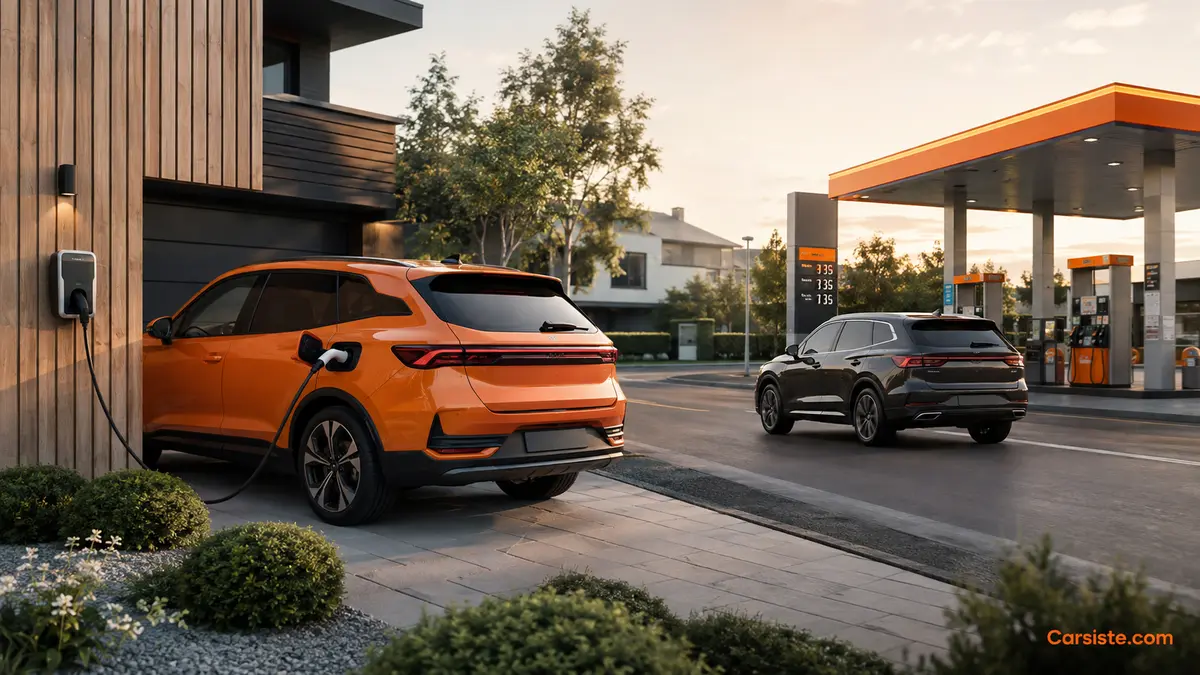
A plug-in hybrid delivers its strongest benefit when it is charged consistently and a meaningful share of driving fits within electric range. A conventional hybrid is simpler for households that cannot plug in routinely: it improves fuel economy automatically but cannot replace gasoline miles with grid electricity. Buying a PHEV and rarely charging it often means carrying extra battery weight without using its main advantage.
What this comparison covers
Compare PHEV and conventional hybrid charging, electric range, gasoline use, complexity and ideal driving patterns.
Side-by-side comparison
| Decision area | First option | Second option |
|---|---|---|
| External charging | Required to maximize benefit | Not possible or required |
| Electric-only travel | Available within usable electric range | Not designed for plug-in electric travel |
| After battery depletion | Operates using gasoline/hybrid mode | Continues normal hybrid operation |
| Ideal owner | Charges regularly and has many short trips | Wants efficiency without charging |
Know how each battery receives energy
A conventional hybrid charges its traction battery through the engine and regenerative braking; it has no external charge port. A PHEV has a larger battery that can charge from the grid, then uses gasoline after electric range is depleted. Both retain a combustion engine.
Calculate the electric-mile share
List typical trips and determine what percentage could be completed electrically between charges. DOE notes that PHEV fuel consumption depends heavily on distance between charging events. Use the vehicle’s real electric range in local weather, not only the brochure figure.
Add both energy systems to the budget
For a PHEV, calculate electricity for electric miles and gasoline for remaining miles. Include charging losses and any equipment cost. For a hybrid, calculate gasoline from realistic MPG. The PHEV also retains engine-related maintenance even if the engine runs less often.
Consider complexity and trip flexibility
A PHEV combines charging capability with gasoline backup, which can reduce range anxiety but creates a more complex dual powertrain. A hybrid avoids plugging in and may weigh less. Compare cargo packaging, towing limits and maintenance schedules for the exact vehicles.
Buyer checklist
- Confirm a practical daily charging location
- Estimate electric-mile percentage
- Compare gasoline MPG after depletion
- Read both battery and engine warranties
- Include charger cost and utility rate
Carsiste verdict
A plug-in hybrid delivers its strongest benefit when it is charged consistently and a meaningful share of driving fits within electric range. A conventional hybrid is simpler for households that cannot plug in routinely: it improves fuel economy automatically but cannot replace gasoline miles with grid electricity. Buying a PHEV and rarely charging it often means carrying extra battery weight without using its main advantage.
Use written prices, exact model specifications, local operating costs and the conditions you encounter most often. A different driver can reasonably reach a different conclusion because mileage, parking, climate, financing, insurance and ownership period change the result.
Official sources and further verification
Also verify the exact model year using manufacturer owner manuals and warranty documents. Check VIN-specific open recalls through NHTSA before buying a used vehicle.
Frequently asked questions
Can a PHEV drive without charging?
Yes, but DOE says fuel use may resemble a similarly sized hybrid if it is never plugged in.
Can a regular hybrid be plugged in?
No. A conventional hybrid charges internally.
Does a PHEV need oil changes?
Yes, because it includes a combustion engine.
Which is better for an apartment resident?
A hybrid is often simpler unless the resident has dependable charging.
How much electric range does a PHEV have?
It varies by model; use the official rating and adjust for weather, speed and battery condition.
Run the numbers for your situation
Editorial note: Carsiste provides educational information, not financial, legal, insurance or mechanical advice. Prices, regulations, incentives, specifications and availability can change. Confirm current information with the relevant manufacturer, dealer, lender, insurer, utility or qualified technician.